

North Baldwin is pine country. Around Bay Minette the properties are bigger, the timber is heavier and the tree problems come at a different scale than they do down on the Eastern Shore. There is one thing about pines that we end up explaining on nearly every job up here.
Tree Service in Bay Minette, Alabama
The pine that dies six months after the storm
A pine that stands through a hurricane looking untouched has not necessarily survived it. Researchers measured standing pines three months after Hurricane Charley. Of the trees left upright, 27 percent of the slash pines and 48 percent of the longleaf pines had died in that window.
Pines can decline anywhere from six months to two years after a windstorm. Some stay green for a year, then yellow and go brown within weeks. The likely cause is hidden damage. Bending and twisting in prolonged wind ruptures the smaller roots without breaking the big anchoring ones, and the injured system can no longer supply the crown.
What that means for a Bay Minette property owner is practical. After any serious blow, keep watching the pines through the following two summers. Yellowing needles, thinning at the top or beetle activity in a tree that came through fine are all worth a call. A dead pine standing over a driveway or a barn is a much bigger job than a declining one you caught early.
If you have pines that went through weather and you are unsure about them, we will come look. Call 251-551-1087.


Acreage work and timber lines
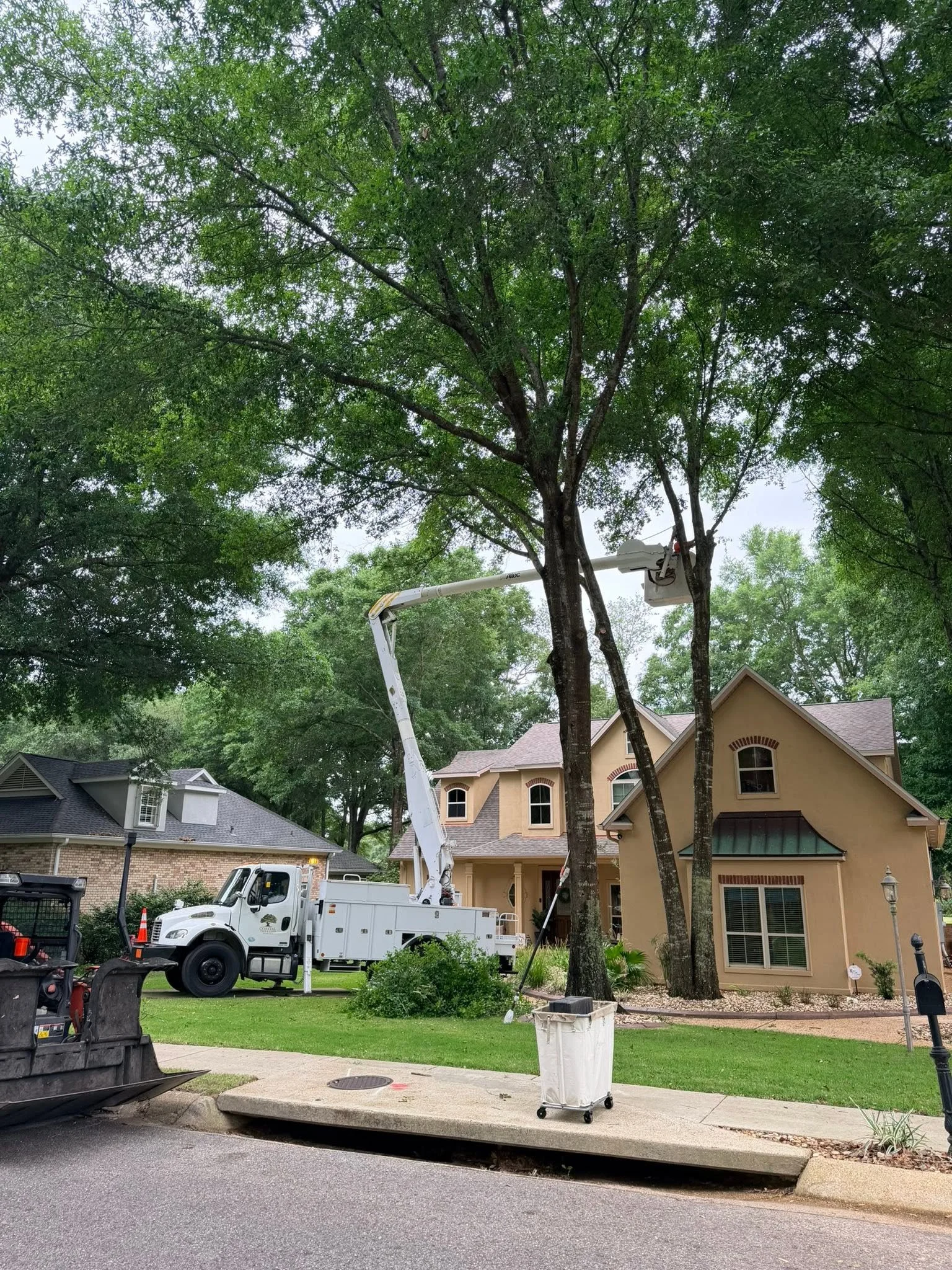
Most of what we do around Bay Minette is bigger than a back yard. Clearing a pasture line, opening a footprint for a barn or a home site, taking out a stretch of hazardous timber along a fence run or a power drop.
Open ground makes the felling simpler and the volume the real question. We size the crew and the equipment to the acreage rather than showing up with a bucket truck and hoping. Where a job runs to serious clearing, the county requires a land disturbance permit. That applies to properties including un-zoned ones, where wetlands are present or the site is exposed to flooding. Clearing over an acre brings a state stormwater permit into it as well. We flag that at the estimate.
Bay Minette does not run the kind of tree removal permit the beach cities do. On ordinary residential trees inside town, the constraint is usually access and power lines rather than paperwork.
Field stumps and root grinding
Old stumps on acreage are a different job from a stump in a lawn. Logging leftovers, storm snaps and hardwood bases that have sat for years all have root systems that spread wide. They keep breaking equipment and hiding in tall grass long after anyone remembers them being trees.
We grind them well below grade so the ground can be mowed, fenced, cropped or built on, and we take the major laterals where something is going over the top. The grindings turn into mulch on site rather than something you have to haul.

Overcrowded stands are a risk
The pines that fail around here are usually the ones that grew up crowded. Competing for light, they run tall and thin with small crowns and not much taper, and a thin tree with a long lever arm is exactly what high wind finds. Thinning a crowded stand is genuine hazard reduction rather than tidiness.
The same logic applies at the edge. Trees in groups survive wind better than trees standing alone, so clearing everything around one big pine and leaving it as a feature tends to end badly. If you are opening ground, it is worth thinking about which trees you leave as a group rather than which single ones look best.
Our tree trimming and removal pages cover the services in more detail.
After a storm
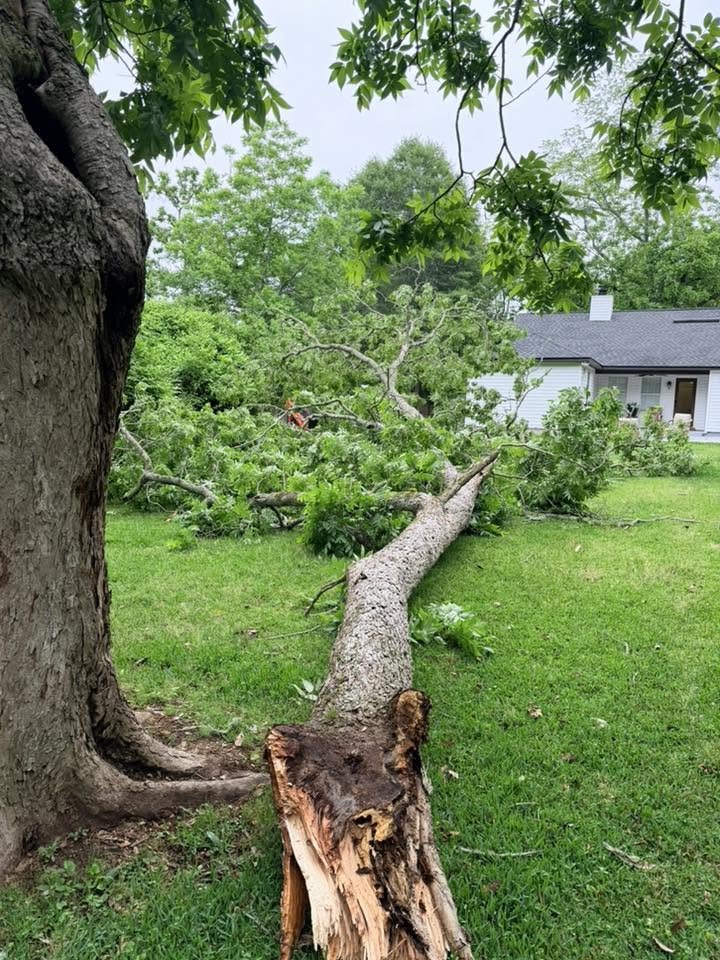
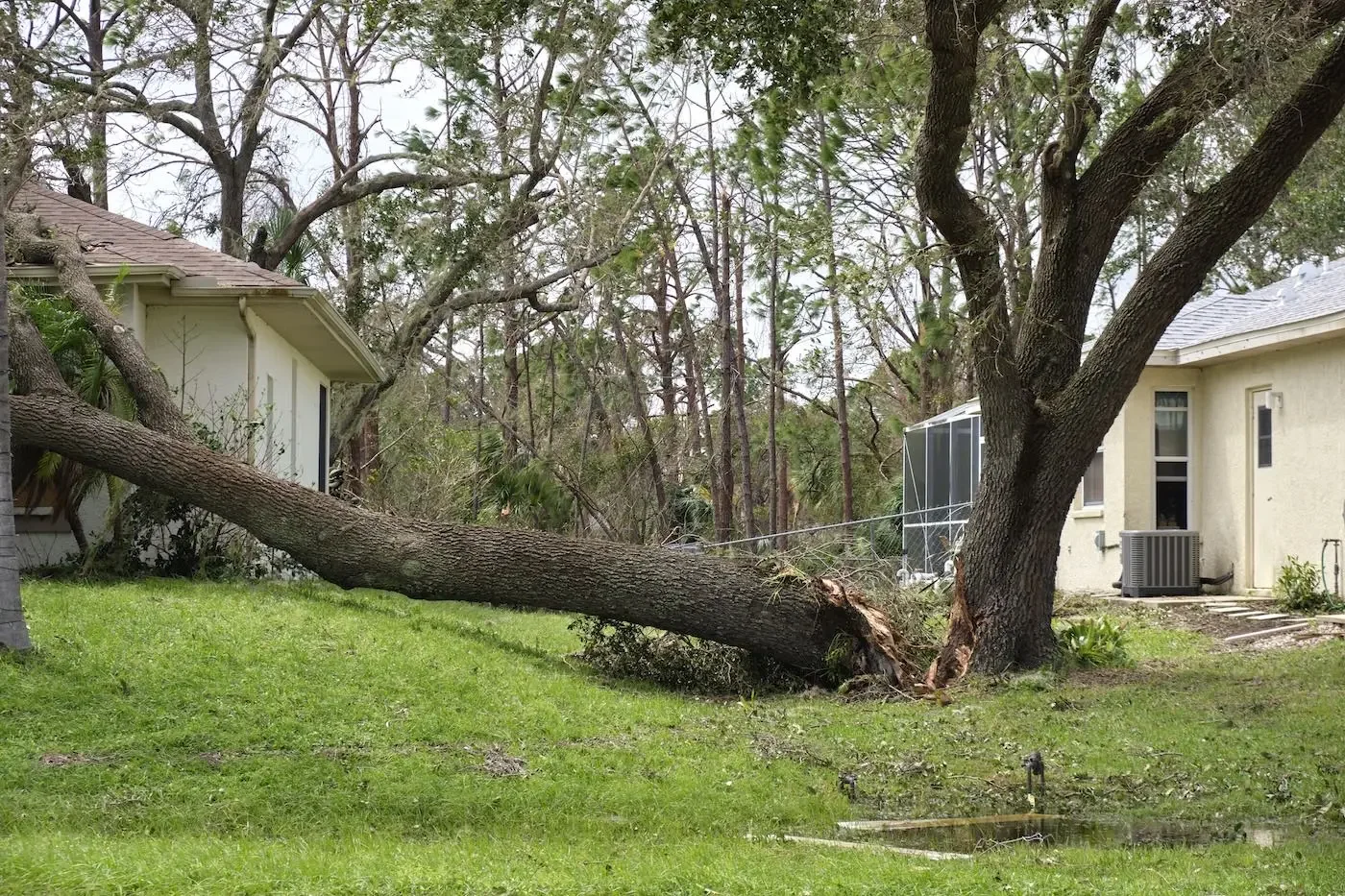
Rural properties tend to wait longest for help after weather, and long driveways blocked by trunks are the call we get most. We run emergency work across north Baldwin. Call 251-551-1087.
Get a free estimate
We are based in Fairhope and we do come north, with equipment sized to the acreage. Coastal Tree & Land Services is family operated and veteran owned, licensed and insured. Call 251-551-1087 or use the contact form.
