Foley has grown fast, and a lot of its neighborhoods are now old enough that the trees planted with them are reaching a decision point. Some are worth keeping for another fifty years. Some are at the end of their natural life and nobody has noticed. Telling the two apart comes down to species and age more than to how the tree looks.
Tree & Land Services
in Foley, Alabama
Which trees are worth keeping
Species and age matter more than how a tree looks from the kitchen window. Research tracking survival across ten Gulf Coast hurricanes sorted common trees by how well they hold up, and the results do not always match a homeowner’s instinct.
Live oak, southern magnolia, baldcypress and sweetgum are the long lived ones, with live oak in the highest wind resistance group and a forest lifespan beyond a hundred years. Water oak, laurel oak, pecan and sand pine all sit in the lowest group. Laurel oak typically lives about fifty years, with decay showing from around forty.
Urban trees generally live shorter lives than forest trees, so those numbers are the optimistic end. A laurel oak planted when a subdivision went in during the 1980s is already past the age where decay typically sets in, whatever the canopy looks like.
If you want a straight answer on a specific tree, call 251-313-1846. We do not charge to come out and we will tell you if the answer is do nothing.
What we do about the ones that stay
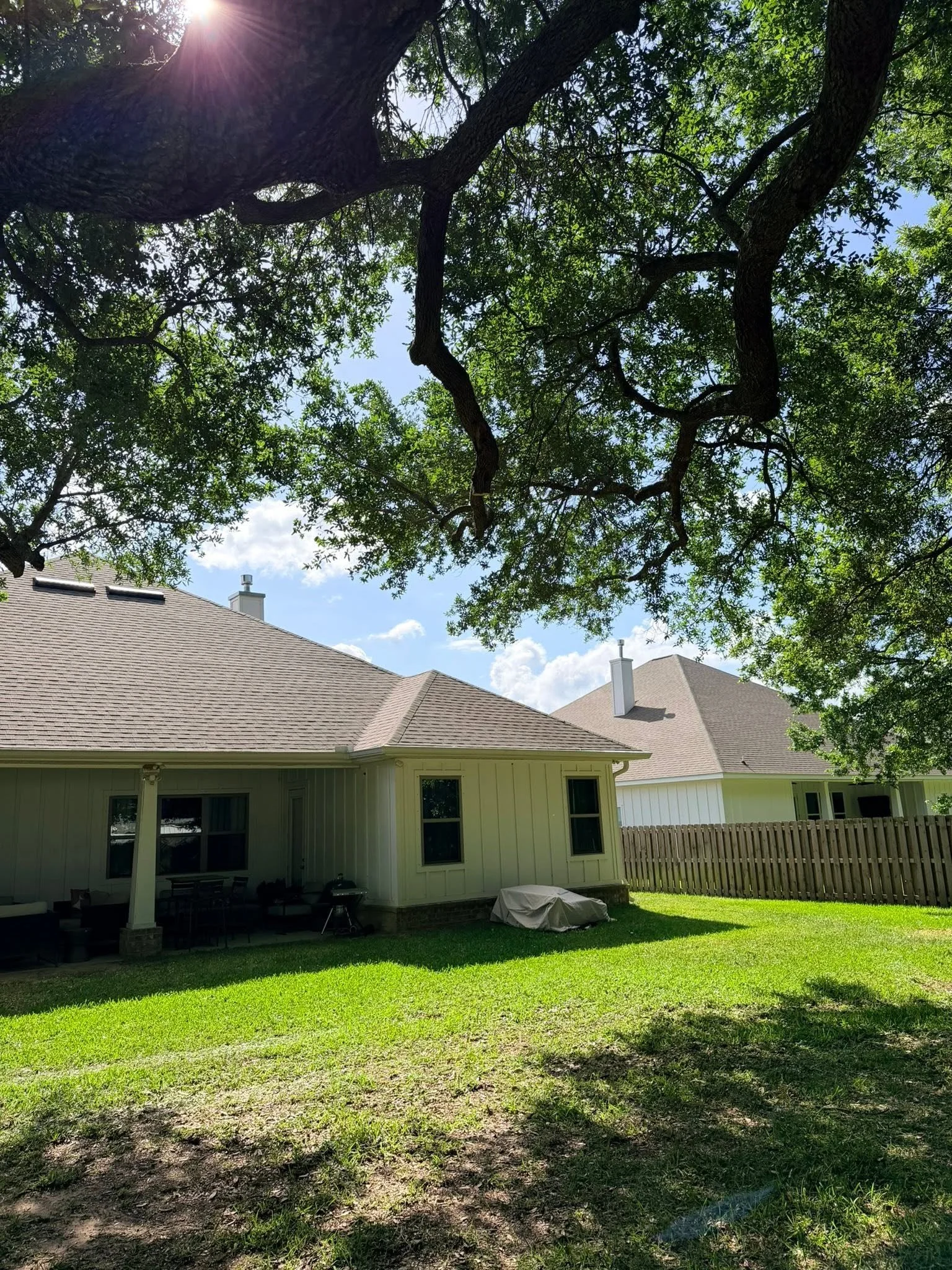
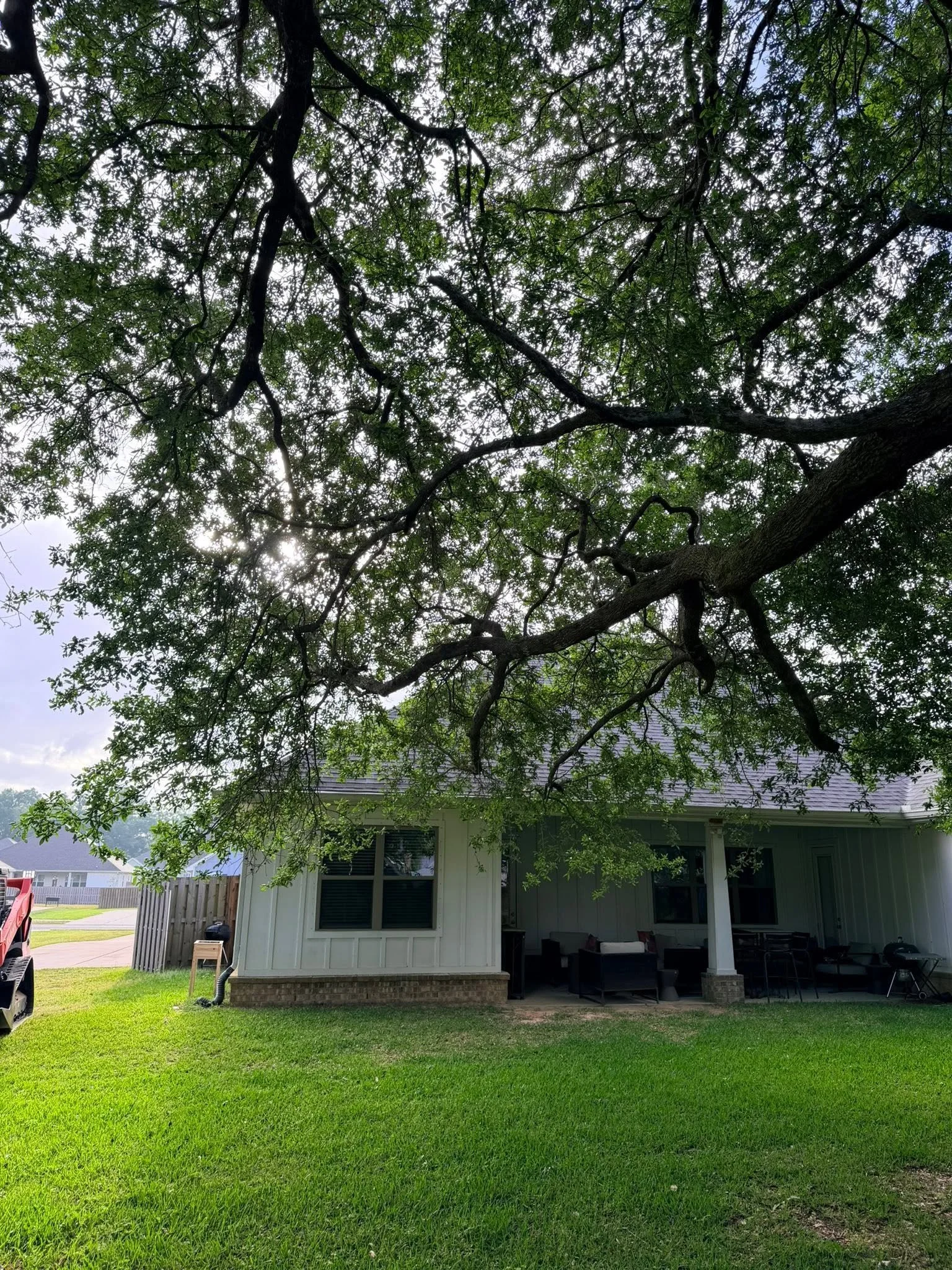
Keeping a tree means maintaining it. On tree trimming jobs in Foley we take out deadwood and open the interior so wind moves through instead of pushing. We also shorten limbs getting long enough to lever against a weak union. Two trunks splitting from one point with bark trapped between them is the failure we see most in subdivision trees, and it is fixable years before it lets go.
We do not top trees. It leaves wounds that decay fungi get into and the regrowth attaches badly, which trades a shady tree today for a dangerous one in a decade.
Removals in tight subdivisions
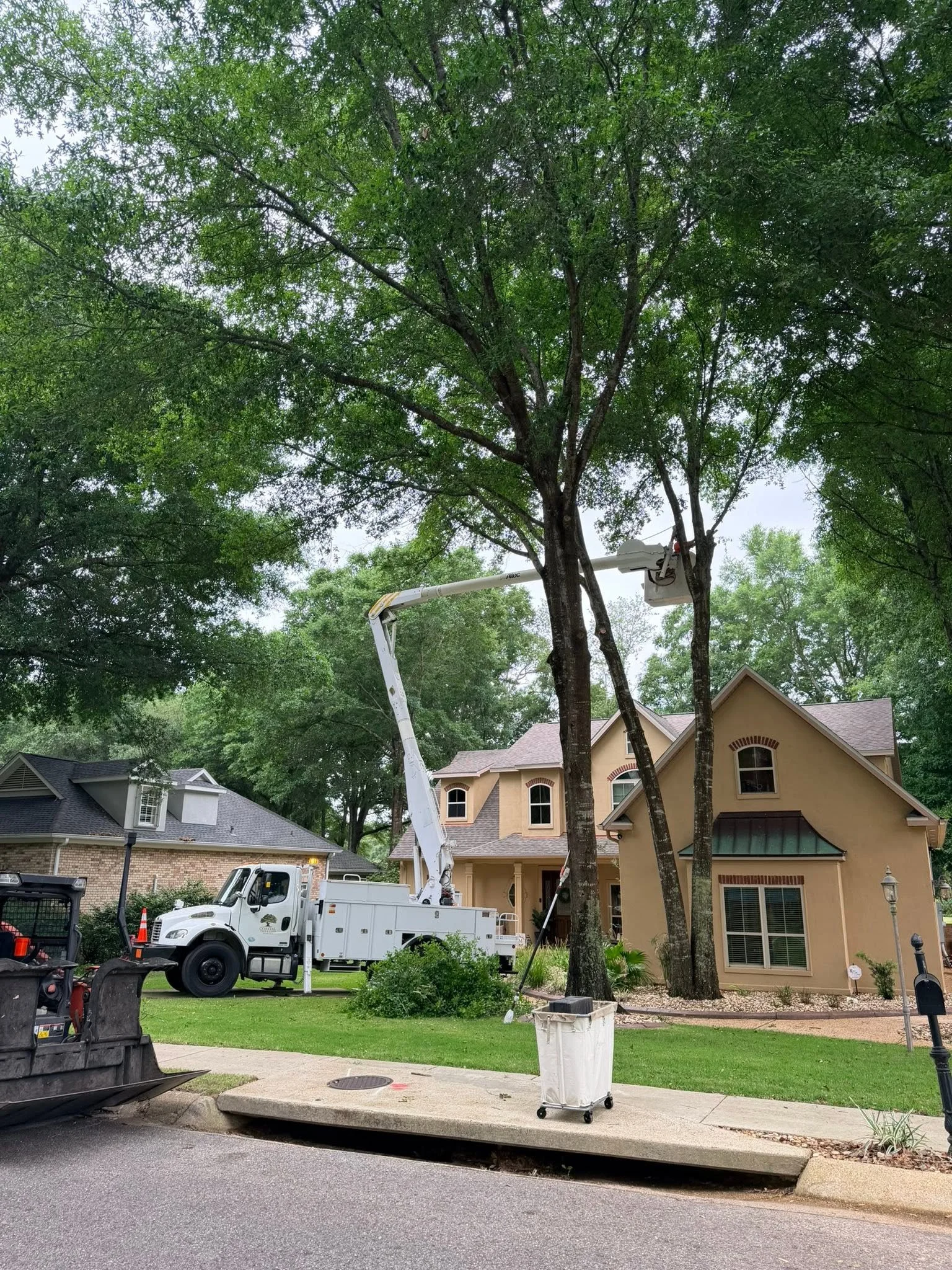
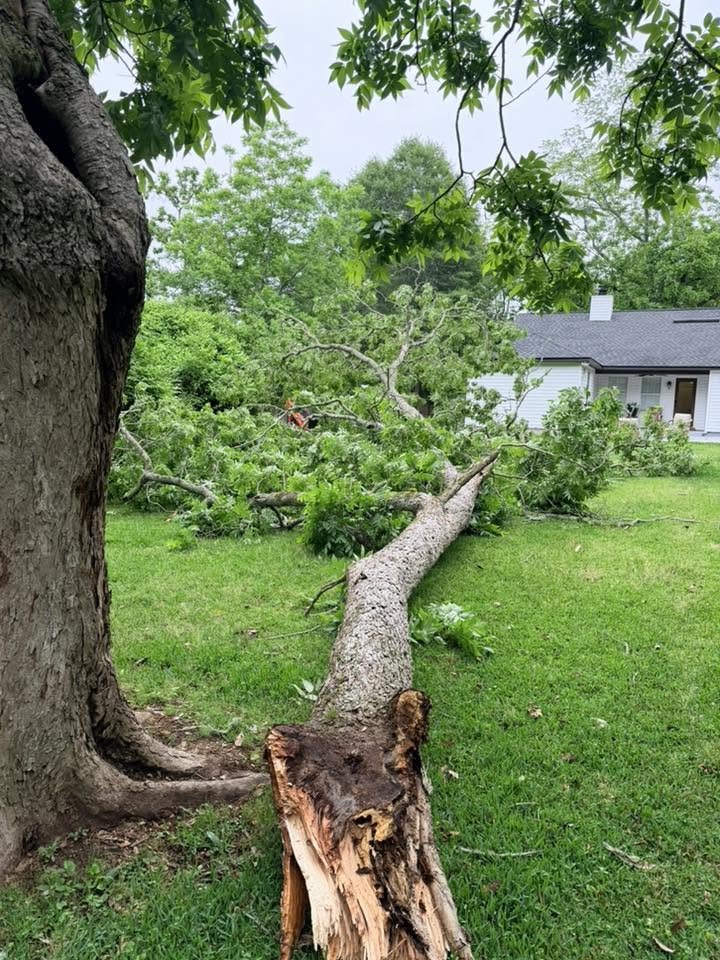
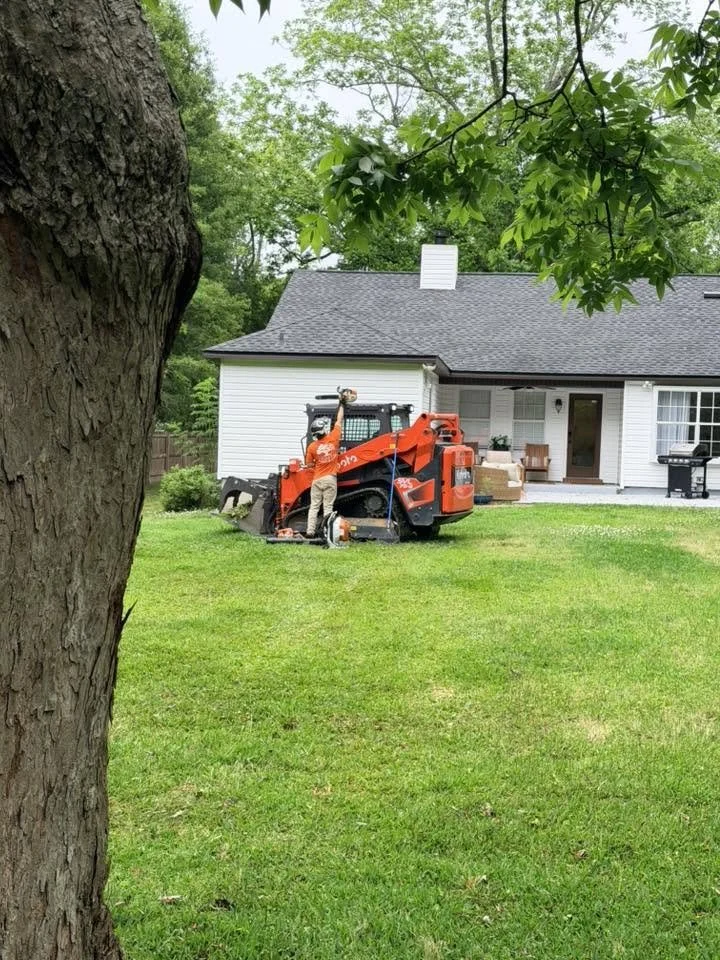
Foley lots sit close together, and most removals here happen with a fence on one side and a neighbor’s roof on the other. We take those apart in sections from the top and rope every piece into a cleared landing zone.
Then we grind the stump below grade so the ground can be turfed, and we haul the debris rather than leaving it stacked at the curb.

Storm work
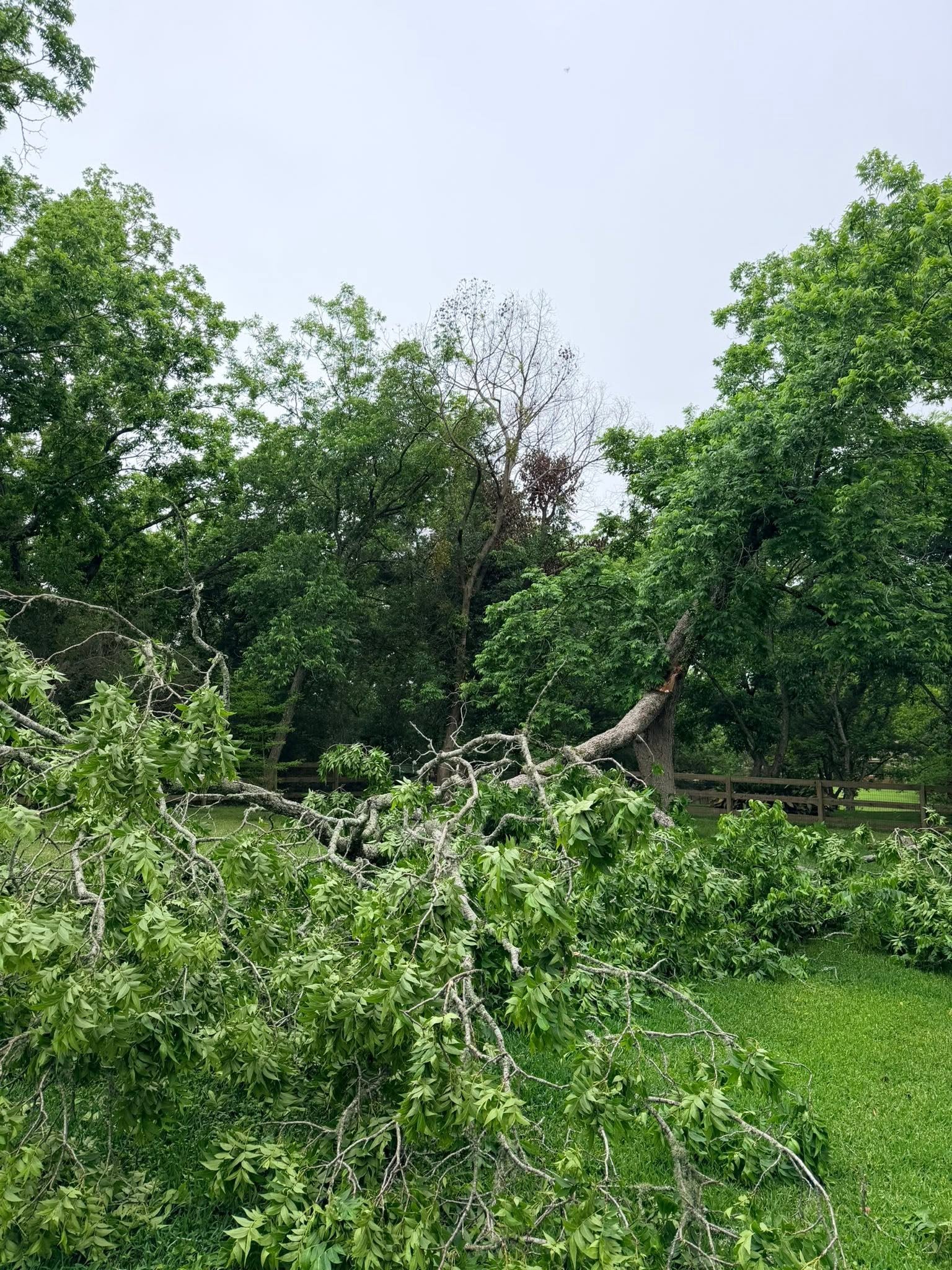
South Baldwin catches weather coming in off the Gulf, and after a named storm we work through the calls with trees on structures first. If a limb is on your roof, phone 251-551-1087 instead of using the form.
One thing is worth watching in the months afterward. A pine that looks untouched can still be dying. Researchers who went back three months after Hurricane Charley found that 27 percent of standing slash pines and 48 percent of standing longleaf pines had died, and pines can fail six months to two years after a blow.
Foley’s heritage tree permit
Foley protects heritage trees by ordinance, and it is unlawful to cut or intentionally harm one without a permit. A heritage tree is a healthy native tree at 30 inches diameter or more, measured at four and a half feet up, with dogwood and redbud protected from 10 inches. The species named include cypress, oaks, magnolias, sweet gums, black gums, juniper and longleaf pine.
The ordinance does not cover the invasives: mimosa, tree of heaven, camphor, chinaberry and Chinese tallow. There are exemptions worth knowing too. Emergency work immediately necessary to protect life or property is exempt, so is agricultural and nursery activity, and so are trees destroyed by a federally declared natural disaster.
Most single trees in a Foley yard fall under the 30 inch threshold. The ones that do not tend to be exactly the trees people most want to remove, so it is worth measuring before you plan.
Get a free estimate
Keep it or take it down, we will give you the answer before you pay for anything. Coastal Tree & Land Services works Foley out of Fairhope. Family operated, veteran owned, licensed and insured, with a five-star record across the county. Call 251-551-1087 or use the form below.